
he history of dermatology is deeply intertwined with the contributions of visionary physicians who recognized that skin of color requires specialized understanding. For decades, the medical field often under-appreciated the unique characteristics of melanated skin. At Affinity Dermatology, we believe that honoring the pioneers who bridged these gaps—while addressing the stark disparities that remain—is essential to providing inclusive and effective care.

The Foundation of Inclusive Medicine
Born in 1892, Dr. Theodore Kenneth Lawless is a central figure in Black History as the first African American dermatologist in the United States. Born in 1892, Dr. Lawless’ medical training included multiple locations because of racism. He was barred from completing his clinical rotations at University of Kansas Medical Center because people of color were not permitted to study past basic sciences classes; he completed his studies at Northwestern University. He began dermatology training at Columbia Medical School and Harvard University, but seeking a more receptive environment, he completed his training in France, Germany, and Austria, spending a year in each location.
Dr. Lawless returned to Chicago’s south side after completing his studies, and he founded a bustling clinic that served countless Black people seeking competent and compassionate care that they could not receive elsewhere. As a research fellow and, later, faculty at Northwestern University 1924-1941, Dr. Lawless established the first clinical laboratory for dermatology. He studied and published papers on skin conditions that disproportionately or differently affected the Black community, thus allowing for the development of nuanced treatment protocols. He also published in the Journal of the American Medical Association, an association that, at that time, prohibited Black members. He was the first Black member of Chicago’s Board of Health, and he was a director of the Supreme Life Insurance Company and Marina City Bank, and he was chairman of the Board of Trustees for Talladega College. Dr. Lawless also worked extensively with the Jewish community, establishing the Lawless Clinical and Research Laboratory in Dermatology at the Hebrew School in Jerusalem, and the Lawless Department of Dermatology in Beilinson Hospital (now known as Rabin Medical Center) in Tel-Aviv, Israel. He said of his philanthropy, “I’m simply trying to repay a debt of gratitude,” noting that of 12 letters of recommendation written on his behalf for his European studies, 11 of them came from Jewish Scholars.
Dr. Lawless paved the way for future pioneers of mentorship and innovation, including Dr. Susan Taylor, sitting president of the American Academy of Dermatology and co-founder of the Skin of Color Society, and many leaders in the field of dermatology. Their ongoing efforts, and those of many others between 1892 to present day, laid the foundation for Dr. Carter herself, the first ever Black dermatology resident at Baylor College of Medicine.
Addressing the Representation Crisis
Despite the foundation laid by pioneers, the field still faces a significant representation gap. While Black individuals make up approximately 13% of the U.S. population, they account for only 3% of practicing dermatologists.
This lack of representation has tangible consequences for patient health:
- Training and Educational Gaps: Dermatology textbooks historically underrepresent conditions on Black skin, and dermatologists often report that they feel inadequately prepared to treat skin of color. For example, common conditions such as redness can present with a violaceous hue as skin melanin content increases. Other conditions, such as pityriasis rosea and certain forms of eczema, can look quite different than on lighter skin tones. This can lead to more unnecessary treatments, unwarranted tests and biopsies, and misdiagnosis.
- Medical Outcomes: Black patients face lower survival rates for melanoma, often due to later-stage diagnosis and the occurrence of lesions in less obvious areas, such as the palms or soles.
Expanding the Reach of Specialized Care
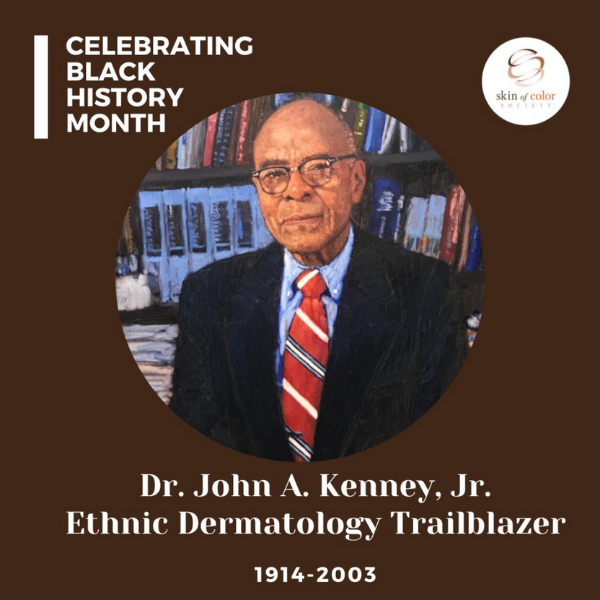
Dr. John A. Kenney Jr. is often regarded as the dean of Black dermatology due to his tireless efforts in mentorship and education. He recognized that for the field to truly progress, there needed to be a dedicated pipeline of physicians trained in the complexities of skin of color. His leadership at Howard University and his role in founding the Skin of Color Society, which still supports practitioners today. We find that his emphasis on specialized training remains relevant to both medical and cosmetic procedures.

Modern Innovations in Skin of Color
In more recent history, Dr. Susan C. Taylor has been instrumental in bringing the unique needs of melanated skin into the mainstream medical conversation. Through her extensive publications and the establishment of the Skin of Color Center, she highlighted the profound lack of representation in dermatology textbooks. Her work advocated for better diagnostic tools and more inclusive clinical trials. We utilize modern skin treatments specifically validated for diverse skin types. This shift toward representation ensures that all patients receive care rooted in accurate clinical data.

The Biological Importance of Melanin
The presence of higher melanin levels provides natural UV protection, but it also influences how skin responds to injury. This biological reality means that certain procedures—such as chemical peels or laser therapies—must be approached with caution to avoid post-inflammatory hyperpigmentation, and certain conditions like acne or psoriasis require more aggressive treatments to minimize the resultant hyperpigmentation. Also, some disorders such as central centrifugal cicatricial alopecia, acne keloidalis nuchae, and hidradenitis suppurativa occur at higher rates in patients with more melanated skin or curly hair textures. Understanding the structural differences in the skin is vital for selecting treatments that prioritize safety alongside aesthetic outcomes.
Pioneers of Mentorship and Innovation
Dr. John A. Kenney Jr., regarded as the “dean of Black dermatology,” recognized that progress required a dedicated pipeline of Black physicians. His leadership at Howard University and his role in founding the Skin of Color Society remain cornerstones of the field today.
In recent years, Dr. Susan C. Taylor has brought these needs into the mainstream through the Skin of Color Center. Her work advocates for better diagnostic tools and more inclusive clinical trials, ensuring that modern treatments are validated for all skin types.
Why Representation Matters in the Exam Room
The presence of Black dermatologists is linked to significantly better patient outcomes. Studies show that when patients see a dermatologist of the same race, they are more likely to:
-
Adhere to treatment plans.
-
Report higher levels of trust and patient satisfaction.
-
Receive accurate diagnoses for conditions like traction alopecia, acne keloidalis nuchae, and hidradenitis suppurativa.

History and Evidence-Based Medicine at Affinity Dermatology
By combining historical insights with modern clinical data, we ensure our patients of all ages and hues receive care that is both scientifically accurate and culturally competent.
We invite you to contact us for a consultation or to learn more about our specialized medical dermatology services.
References and more information:
Adamson, Ade. More than Skin Deep: Theodore K. Lawless, a Dermatologist, Scholar, and Philanthropist. https://adeadamson.com/blog/2017/2/22/more-than-skin-deep-theodore-k-lawless-a-dermatologist-scholar-and-philanthropist
Cure Melanoma. https://www.curemelanoma.org/about-melanoma/people-of-color
Kaundinya, T. And Kundu, RV. Diversity of Skin Images in Medical Texts: Recommendations for Student Advocacy in Medical Education. J Med Educ Curric Dev 2021 Jun 11;8
Bader, Kaitlyn. Celebrating Black History Month in Dermatology. Dermatology Times. https://www.dermatologytimes.com/view/celebrating-black-history-month-in-dermatology#:~:text=%E2%80%9CAbout%25203%2525%2520of%2520practicing%2520US,an%2520interview%2520with%2520Dermatology%2520Times.