
If you’re one of the estimated 7.5 million Americans who suffer from psoriasis, you know just how frustrating and embarrassing this skin condition can be. You may have tried all sorts of treatments, both over-the-counter and prescription, with little to no success. If this is the case for you, it’s time to see a dermatologist. At Affinity Dermatology in Frisco, TX, our team of specialists has extensive experience in treating psoriasis, and we can help you find relief from your symptoms. Learn more about the treatments we offer and call our dermatologist in Frisco, TX to schedule an appointment!
What Is Psoriasis?
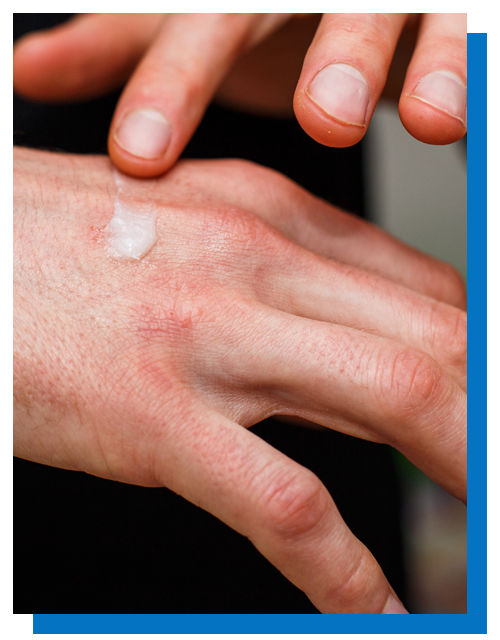
Psoriasis is a chronic skin condition that causes the rapid buildup of skin cells. This can lead to thick, scaly patches on the skin that may be itchy and painful. Psoriasis is thought to be caused by an overactive immune system and often, affected patients may have families with the condition as well. Although there is no cure for psoriasis, there are treatments that can help to control the symptoms.
Types of Psoriasis
There are five main types of psoriasis:
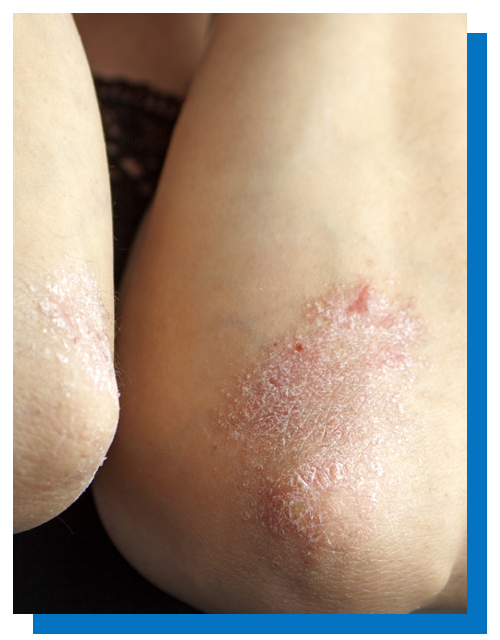
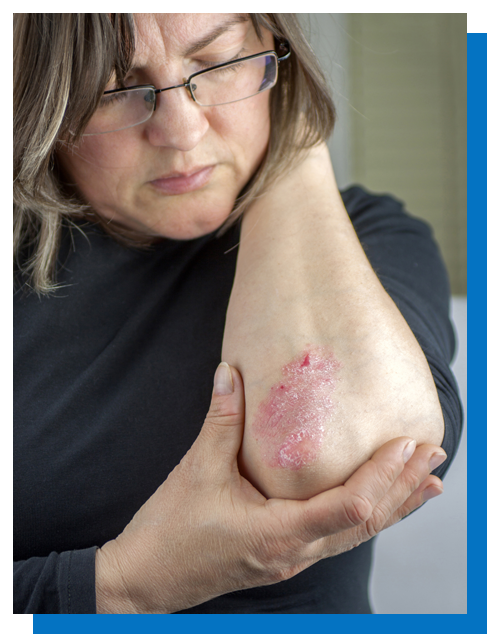
- Plaque psoriasis is the most common type and is characterized by red, inflamed patches of skin covered with silvery scales.
- Guttate psoriasis is a form that usually appears after a person has had a strep throat infection. It causes small, teardrop-shaped lesions on the skin.
- Pustular psoriasis is a rare form that causes pus-filled blisters to develop on the skin. This may also occur on the palms of the hand and soles of the feet, causing pain and difficulty walking.
- Inverse psoriasis is a form that appears as smooth, red patches in body folds, such as the armpits or groin.
- Erythrodermic psoriasis is a rare and serious form that can cause the skin to become red and scaly all over the body.
Common Symptoms of Psoriasis
The most common symptom of psoriasis is patches of thick, scaly skin. These patches are often red or white and can be itchy and painful. They may also bleed if you scratch them. Additionally, psoriasis can make you experience joint pain, stiffness, and fatigue, which are characteristic of psoriatic arthritis. If you have symptoms of psoriasis, particularly accompanied by symptoms of psoriatic arthritis, it is imperative that you contact your dermatologist quickly to avoid further skin or joint damage.
Treatments for Psoriasis
There is no cure for psoriasis, but there are treatments that can help to control the symptoms. Your dermatologist may recommend a combination of therapies, including:
- Topical medications, such as creams, foams, shampoos, or ointments
- Phototherapy, which involves exposing the skin to controlled doses of ultraviolet light
- Systemic medications, that work throughout the body, include oral options such as methotrexate or Otezla, or injectable medications such as Humira, Stelara, Taltz, Tremfya, or Skyrizi
- Excimer laser, or Aerolase Neo Elite laser (offered at Affinity Dermatology), which helps treat chronic, localized psoriasis